Journey to the West |
On Saturday, I went to New York. I drove 5ish hours from Andover, Massachusetts, all the way to Hamilton, New York, to see Colgate University with my girlfriend. I know, it’s pretty awesome. I saw lots of cool things along the way and I thought I’d share.
I’ve become pretty familiar with the city of Worcester for some reason. Its train station, with the two spires with flags on top, is so recognizable when I take the highway up and down from Andover to Darien. I think I’ve actually entered the city thrice, all in search of delicious Vietnamese food.
After passing Worcester going south, we headed west. In search of gas, I entered the city of Lee, Massachusetts, where I had to settle for $4.249 per gallon. It was a robbery, yes, but in the gas station, we found a “golden ticket” to a local candy shop, just up the road in Lenox, Massachusetts. A quarter pound of candy for free is not bad at all, especially given the fact that a pound was $25.18.
When we entered the town of Lenox, the road was blocked by none other than an Indian wedding. A quick Wikipedia search told me that Lenox was a small town of 5,077 people. And get this: it was 0.02% Asian. That means we stumbled across the only Asian person in town, and he was throwing a party for a wedding. How awesome is that? Did you know that Lenox has Gilded Age history? Their school mascot is called the Millionaires! That’s incredible. I always like looking at the demographic page on Wikipedia when I visit a new place. You can tell a lot by how the population grows and shrinks.
Anyways, after purchasing 0.84 lbs of candy, we ran into some traffic. Apparently we’d chosen the perfect day to come to Lenox, because the Tanglewood concert was happening that afternoon. I learned it’s the summer home of the Boston Symphony Orchestra and Boston Pops. I mean, that day they had Paul Simon, the Simon in Simon & Garfunkel, performing. What the heck?
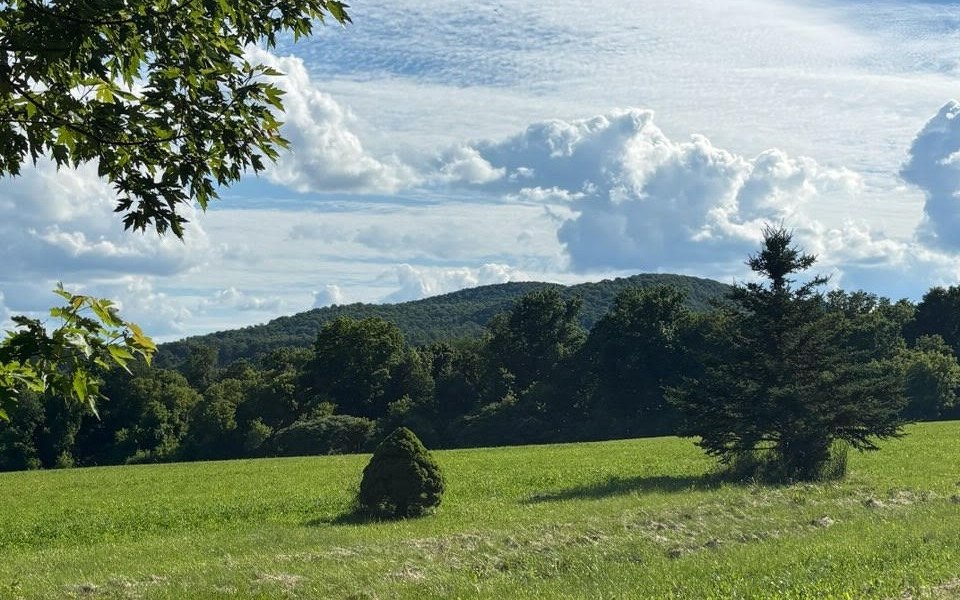
After leaving Lenox, it was time for Upstate New York. It was gorgeous—Waze took me through 60 miles of New York Route 20. The rolling hills, the open fields, the quaint barns, wow. At one point, we crossed the Hudson River, and I was reminded of junior year History 300, when we were herded to the Addison Art Gallery to look at paintings of the Hudson River Valley for an hour.
We started our Route 20 journey at Duanesburg, in Schenectady County. I’m not used to understanding locations by counties, but for how rural the area is, it made sense. In each county, I swear we only passed by 1-2 towns. We stopped for gas at Sharon Springs, Schoharie County, right next to the town’s school. Wikipedia says the town has a population of 483. Its peak was actually 1880, with a population of 627. They were famous for their spas, once, I suppose. Their school has 284 students, and it’s K-12. I don’t remember much about the downtown, but on the edge of town sits a huge Walmart distribution warehouse, semis backed up by the hundreds in the lot. Apparently a town of 483 has the infrastructure to move a slice of the Northeast’s retail goods through it.
That population decline was pretty obvious as we drove further on. Lots of barns and houses on the side of the road looked as though no one had touched them in decades. One shack was completely flattened into a field, as if God had taken a fist and slapped it into a pancake of rotting wood and red paint. Did you know the reason why barns are red is because farmers mixed iron rust into linseed oil? Apparently there are anti-fungal properties. When industrial paint production started, red was also the cheapest, as it was colored with rust too.
At one point, we saw a fountain in a reservoir and stopped at a nearby motel to take pictures. It was only after closer inspection that we realized some windows were smashed, some doors were boarded up, and the cars in the parking lot had no license plates and plants growing through them. I wonder why the people that abandoned the motel even left their cars.
Otsego County had two towns: Richfield and Richfield Springs. Passing through, the former downtown was straight from the 1940s: some stores even still had advertisements for 5 cent and 10 cent food items in the windows. What was inspiring(?) sad(?) about the towns were the utility poles: every single one spanning both towns’ edges had posters, sometimes two, one hanging from each side, sometimes three, of dead servicemen. So many black and white photos labeled WWII and Vietnam, the words “HOMETOWN HEROES” emblazoned over every banner. These towns have a combined population of 3,000, and there must have been over 100 fallen men that we passed during our drive through.
At one point, we reached a junction and decided to stop to run in a field. We stopped by a tavern with an empty parking lot, and a sign in the window said they were closed: the owners had retired since Nov 1st, 2025. There were still some lights on inside, but I suppose you could just do that. What did it matter to leave things up? Who’d want to buy up the tavern?
The politics of the area were also interesting. Of course, almost all of Upstate New York is red, but what stood out was a Circle K, I think in Herkimer County. While I was waiting for my girlfriend to use the bathroom, I leafed through the newspapers. The headline: “SOROS STOOGES Lefty moguls pump $103M to radical Dems!” Reading on: “Democratic kingmakers George and Alex Soros have spent a staggering $103 million in the midterm election cycle so far, and could soon shatter the US spending record that George set during the last midterms. Father and son have propped up radical anti-America candidates like Rep. Ilhan Omar (D-Minn.) and scandal-scarred Maine Senate nominee Graham Platner, among others.” I flip to the next page, and there’s an article about how the last Hooters has closed in New York State. Incredible stuff.
Not 30 seconds after we’ve left the gas station, I see a cool motorcycle and a little wagon attached to it. That’s amazing! Then I look at the rider, a bald white guy covered in tattoos. Then, my eyes go to his chest. He has a damn Nazi Eagle across his pecs, swastika and all. Holy shit, I’ve just seen my first Nazi in the wild. Coming from American Suburbia surrounding some very liberal cities, it was genuinely pretty crazy to see stuff like that. Even the host of the Airbnb we stayed at had a card on his wall, proudly proclaiming his son(?) nephew(?) relative was going to start at Liberty University in the fall. I know higher ed is often criticized for being a very liberal echo chamber, but I don’t think I’d want to attend a school that fines you for viewing R rated movies, swearing, or “involvement with witchcraft, séances or other satanic or demonic activity” (that last one is a 500 dollar fine and 30 hours of community service by the way).
Entering Colgate felt like walking into a bubble after miles and miles of Upstate New York. It had the same rolling green hills, the beautiful lakes, and the small town charm, but it was so polished and well maintained compared to the rest of the area around it. The department of indigenous studies talked about partnering with the Oneida, while I vividly remember a huge tepee on the side of the road, selling “Indian Memorabilia.” I mean, come on, I don’t even think the Oneida lived in tepees. There was accommodation for religion in a meditation house, while on the drive over, we passed billboards that screamed in all caps: “SIN WILL FIND YOU OUT. JESUS WILL LET YOU IN.” The only memorials on campus were for kids killed by drunk driving, not war.
Every single one of these towns’ demographic pages tells a not-so-great story about what’s to come. Turns out the median age in these counties is going up at double the statewide rate. I don’t know if one day, every home will be pancaked into the dirt. Maybe the taverns and farm stands will close up shop one by one as the families that run them retire.
Driving back home, there was a little stretch of highway almost carved into the hills: layers of rock jutted out from the sides, and for a brief minute, a cloud cast the whole area in shadow. As the cloud split, the sun’s rays followed the highway east, as if the light itself were cleaving the rock in two. What a beautiful, sad, and strange place.